
Denebolian republic - Enviroment
Denebolian Ministry of Urban Development
The Ministry of Urban Development is the leading governmental authority overseeing urban planning, smart infrastructure, and sustainable city growth across the Denebolian Republic. The ministry ensures that all cities, settlements, and public spaces reflect modern technological advancements while respecting historical heritage and cultural identity.
MUD is responsible for shaping the future of Denebolian cities, ensuring that every development meets the highest standards of efficiency, sustainability, and accessibility. By integrating artificial intelligence, self-repairing nanite structures, and adaptive planning, the ministry guarantees that all urban expansion remains harmonized with the environment and the needs of citizens.
Whether through smart zoning policies, green urbanization projects, or historic preservation efforts, MUD plays a vital role in the long-term vision of Denebol Prime and beyond. The ministry's policies and projects reflect a balance between innovation and tradition.
Through carefully structured development plans, MUD defines what can be built, where, and how, ensuring that urban expansion is strategic, well-planned, and beneficial to all.
Our Mission
- To design and regulate urban spaces that are technologically advanced, environmentally responsible, and socially inclusive.
- To integrate AI-powered planning and self-repairing structures into every new development.
- To preserve and protect historic architecture while fostering innovative expansion.
- To implement zero-emission policies and sustainable city models across the Republic.
- To ensure full accessibility, pedestrian-friendly roads, and well-connected transit networks for all citizens.
Current minister: Ing. arch. Martin Thomas Novak, Ph.D.
"Building the Future, Honoring the Past"
Organizational Structure
- Minister of Urban Development
- appointed by Parliament
- reports to the President and Parliament
- Vice-Minister of City Planning & Infrastructure
- Vice-Minister of Environmental & Historic Preservation
- Director of Smart City Development
- Secretary of Historic & Cultural Preservation
- Chief Engineer of Adaptive Infrastructure
- Legal & Administrative Divisions
Legislation
Urban Development & Heritage Protection Act (DRL042524UD)
The Urban Development & Heritage Protection Act establishes zoning laws, construction standards, and historical preservation regulations across the Denebolian Republic. It mandates minimum building heights, green infrastructure, full transit accessibility, and AI-driven urban planning while ensuring protected historical sites are preserved and marked with stone monuments. This act shapes sustainable, efficient, and future-proof cities while respecting Denebolian heritage.
Core divisions & its responsibilities
Department of City Planning & Zoning
Oversees the strategic development and expansion of Denebolian cities, ensuring orderly growth and zoning regulations that align with technological and social advancements.
Designates zoning categories. Approves development plans that define what can be built where. Ensures all new developments respect their surroundings in terms of height, size, materials, and function. Updates and maintains the official Development Plan, a legally binding document that dictates urban expansion.
Department of Infrastructure & Construction
Manages the construction of public infrastructure, pathways, smart cities, and large-scale development projects.
Regulates construction standards, including the mandatory 5-block minimum floor height rule. Ensures all buildings are accessible via pedestrian roads and transport hubs. Supervises smart infrastructure projects, including self-repairing nanite buildings. Mandates that all flat-roofed buildings incorporate green roofing systems. Monitors AI-assisted engineering and safety compliance for public structures.
Department of Sustainable Development & Climate Resilience
Ensures that urban expansion does not compromise environmental sustainability, integrating green building materials, energy-efficient city layouts, and climate resilience strategies.
Mandates the use of 100% renewable energy in all public and commercial buildings. Implements smart irrigation, urban cooling, and air-quality monitoring systems. Establishes vertical gardens, rooftop farms, and energy-efficient skyscrapers. Regulates carbon-neutral policies in urban construction.
Department of Public Transit & Transporter Integration
Oversees the integration of Denebolian transportation infrastructure, ensuring that all new buildings align with transit networks.
Ensures all subway stations are clearly marked and accessible by both stairs and elevators. Manages smart pedestrian infrastructure, linking all new buildings to roads and transit hubs.
Oversees the standardized construction of personal transporters, requiring: 3 blocks of white concrete stacked vertically, top block with a sign displaying the transport point name, middle block with a stone button for activation and a sea lantern placed in front of the transporter for landing indication.
Ensures safety compliance and regulated access to designated transporter points.
Department of Historic & Cultural Preservation (HBPA)
Protects historical landmarks, monuments, and cultural buildings by ensuring proper restoration, conservation, and integration into modern urban landscapes.
Enforces the Historical Preservation Act, ensuring that all structures predating 2018 N.T. are preserved and restored using AI-guided nanite technology.
Oversees the placement of mandatory stone monuments in front of every building, which must include name of the building, date of construction (and restoration if applicable), original purpose and history and architect's name (if available).
Conducts heritage assessments before any urban renewal projects. Collaborates with the Ministry of Culture to protect culturally significant sites.
Denebol Prime Development Strategies
Basic Development Strategy
The Basic Strategy builds upon the foundation laid by the Development Map. Its purpose is to create a dynamic and adaptable urban environment that supports a high quality of life for Denebolian citizens.
Goals of BD Strategy:
Prioritizing eco-friendly technologies and energy-efficient buildings, integrating green spaces, and ensuring resource management meets the demands of future generations. Encouraging the use of advanced technologies in construction, utilities management, and public services to improve efficiency, safety, and citizen engagement. Collaborating with private enterprises to stimulate innovation, while ensuring that developments adhere to the public welfare, environmental standards, and zoning laws. Ensuring that urban growth complements and preserves Denebolian heritage and culture by carefully incorporating new developments into existing cityscapes and historical areas. Promoting affordable housing, equitable access to public spaces, and services that meet the needs of all citizens, ensuring that the development benefits every demographic.
BDP Legend
- HB – Residential Buildings (Housing areas, apartment complexes, private homes)
- S – Services and Trade Companies (Shops, commercial centers, private businesses, offices)
- GB – Government Buildings (Administrative offices, parliament, city halls)
- GI – Government Institution Buildings (Ministry offices, law enforcement, research centers)
- AG – Agriculture (Farms, hydroponic facilities, food production zones)
- PP – Public Spaces/Parks (Green areas, plazas, recreational spaces, nature reserves)
- ES – Education and Sports (Schools, universities, training centers, stadiums, sports complexes)
- C – Culture (Museums, theaters, historical landmarks, libraries, event centers)
- TI – Transport Infrastructure (Subway stations, maglev routes, transporter hubs, pedestrian roads, highways, spaceports)
Basic Development Plan
The Development Map serves as a legally binding framework that governs the growth and expansion of Denebolian cities. This comprehensive document outlines zoning regulations, infrastructure development, and transportation networks, ensuring that all urban activities are in harmony with the Republic's environmental sustainability policies.
The Development Map guarantees that all new construction projects adhere to the urban planning principles set by the Denebolian Republic. It ensures that city growth is not only practical and sustainable but also respects the heritage of existing structures and the environment.
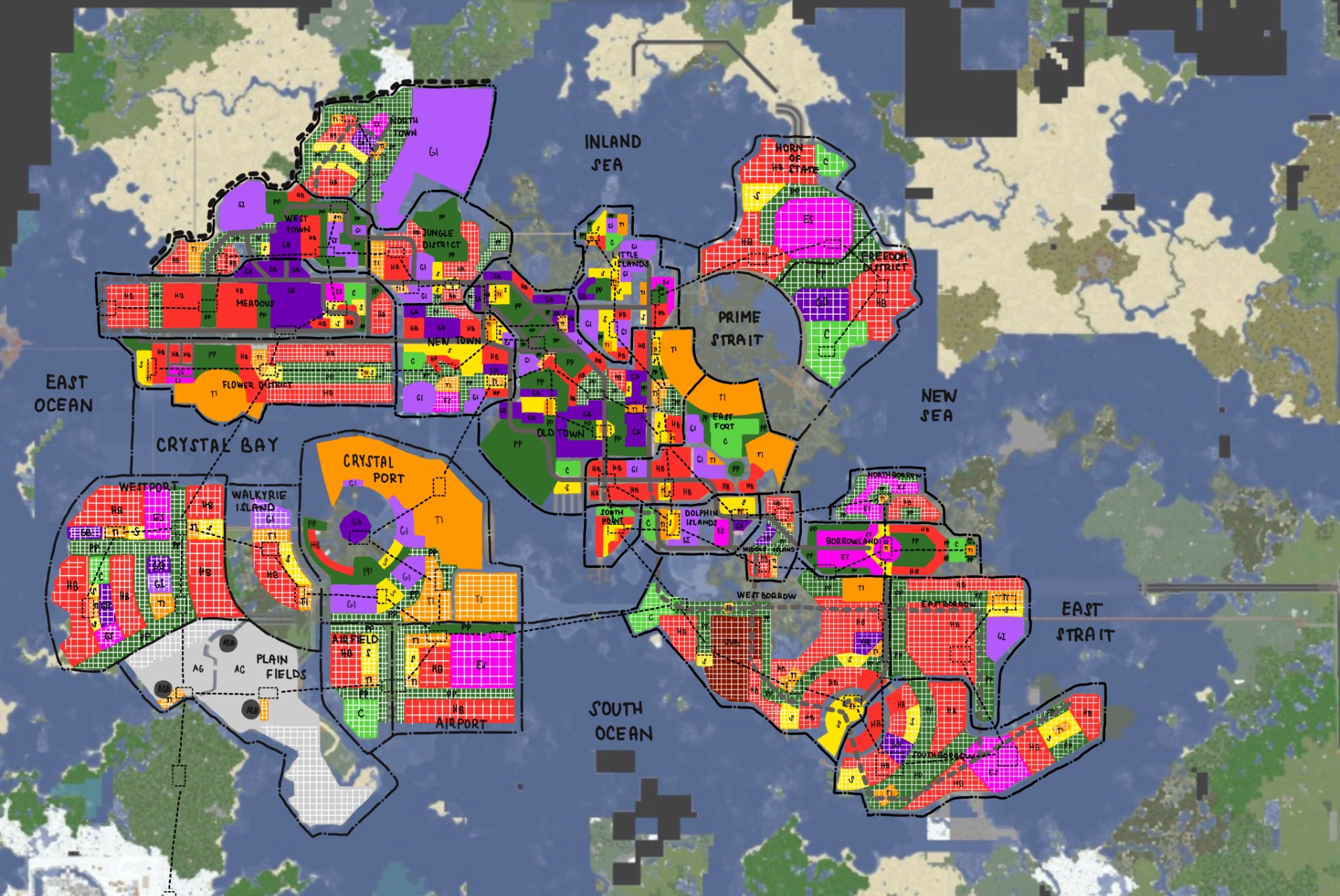
Click on the picture for zoom.
Transportation Development Strategy
The Transportation Strategy aims to create a forward-thinking, efficient, and environmentally sustainable urban transportation network that enhances Denebolian citizens' mobility while maintaining high standards for safety, innovation, and convenience.
Goals of TD strategy:
Ensuring that all forms of transportation—MagLevs, subways, personal transporters, aircraft, and hovercraft—work together seamlessly, enabling easy transfers and smooth transitions for all users. Continuing to prioritize green transportation technologies, such as electric-powered personal transporters and MagLevs, while limiting the use of resources and energy. The strategy supports carbon-neutral urban mobility and ensures that every new development adheres to eco-friendly standards. With no cars and no congestion from combustion engines, the focus is on creating clear, efficient routes and making transportation accessible to all. Special provisions for citizens with mobility challenges will ensure inclusivity across all transport methods. AI-driven systems will ensure the efficient functioning of the entire network, from managing the flow of personal transporters to controlling aircraft flight paths. Real-time data and predictive algorithms will mitigate any disruptions and maintain the highest levels of efficiency.
Transportation Development Plan outlines:
- MagLev Routes (Basic description of routes and stations, including positions)
- Subway Network (Basic description of routes and position of stations)
- Personal Transporter Network (Basic transporters localisations)
- Transit Hubs (Outlining transfer stations and major transport hubs)
- Hovercraft routes (establishing hovering corridors and route directions for safe transportation)
- Trade and Freight Routes (Marking global trade and freight routes)
- No-Fly Zones (designating restricted areas and no fly zones)
- Green Routes (designating pedestrian connections through parks and pathways)
Transportation Development Plan
The Transportation Development Plan outlines a sustainable and cutting-edge transportation infrastructure for Denebolian cities, eliminating traditional combustion engines in favor of advanced, environmentally friendly transport methods. The plan focuses on creating a seamless, efficient, and interconnected network of transportation options for both citizens and goods, ensuring that Denebol's urban development thrives without the drawbacks of congestion or pollution.
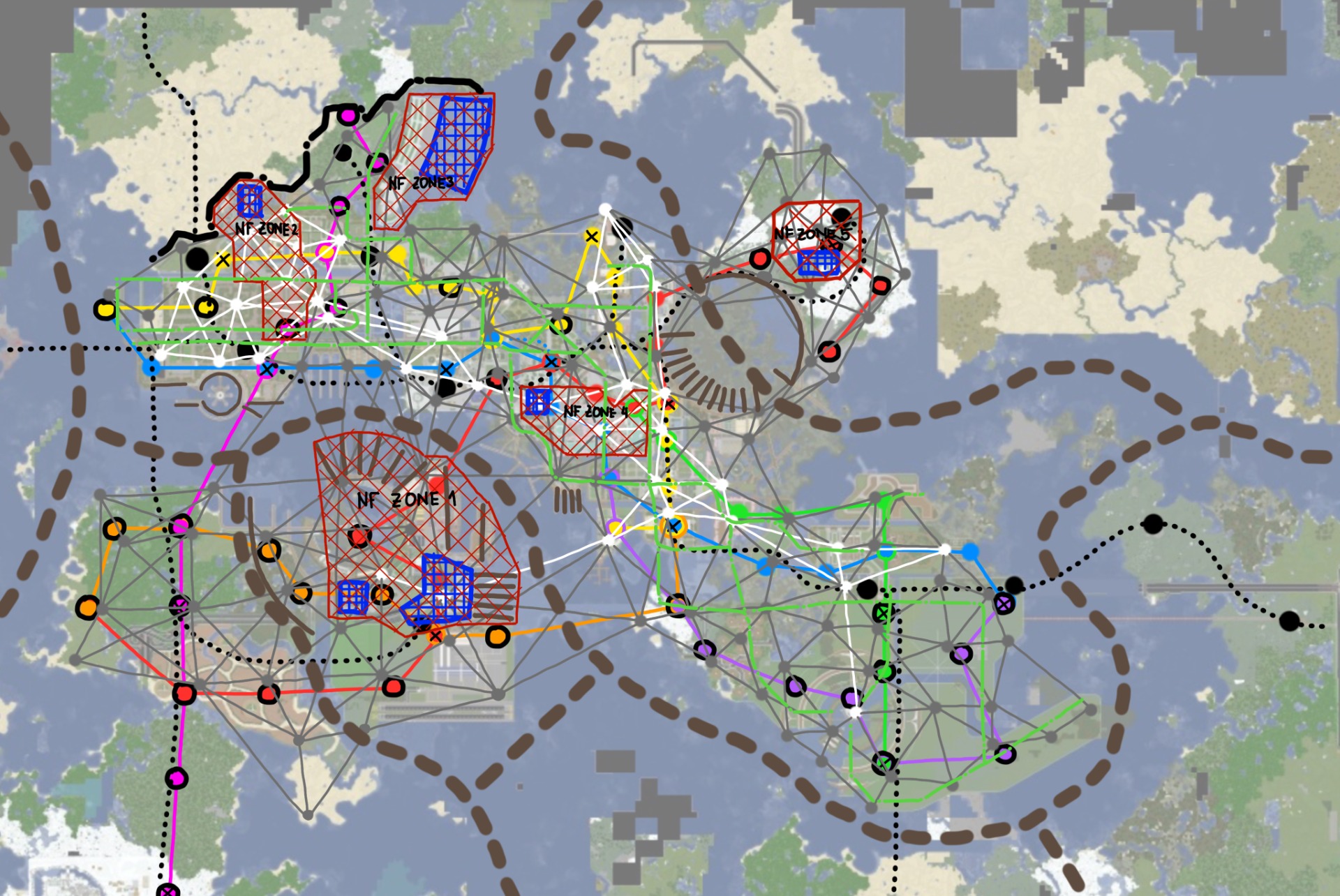
Click on the picture for zoom.