
DOCUMENT 02 - MAP OF ARCHITECTURAL VALUES
Denebolian Ministry of Urban Development
Introduction
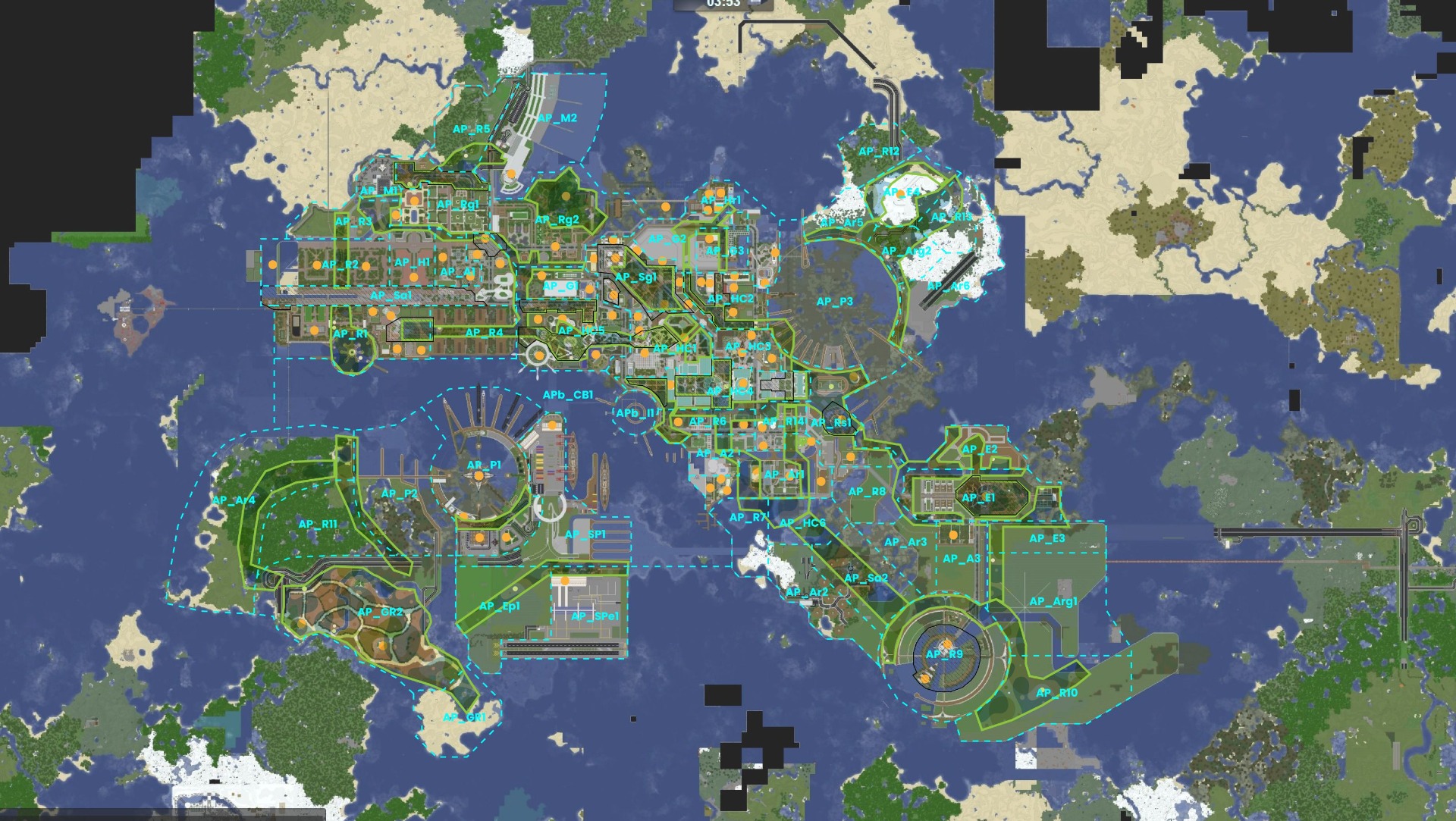
The Map of Architectural Values forms the second regulatory layer of the Denebol Prime Metropolitan Plan. It identifies architectural areas, green corridors, special protection areas and significant buildings with historical protection.
The map should be read together with its legal description. The map defines the spatial extent of each architectural area, while the legal text defines the material rules, urban-study requirements, protected buildings and specific development conditions.
Architectural areas are not limited by city-district boundaries. They are defined according to the actual character of the built environment, public spaces, landscape structure and important historical buildings. This allows the plan to protect coherent urban areas even where they cross administrative or district borders.
This document serves as a guide for future development, reconstruction and public-space works. It ensures that new interventions can happen without weakening the architectural identity, historical continuity or landscape structure of Denebol Prime.
Leave a message
Legal Attachment
Regulatory Description of Architectural Areas, Green Corridors and Protected Buildings
Article I. - Purpose of the Document
- The Map of Architectural Values forms the second regulatory layer of the Denebol Prime Metropolitan Plan.
- The purpose of this document is to identify and protect the architectural, urban, landscape and historical values of the city.
- The document defines architectural areas independently from city-district boundaries. Architectural areas may therefore cross district borders where a unified architectural or landscape character exists.
- Each architectural area is identified by a marker shown on the Map of Architectural Values.
- This document also identifies biocorridors, green areas, special protection areas and significant buildings with historical protection.
- The rules contained in this document shall guide future development, reconstruction, public-space design, infrastructure works and urban studies.
Article II. - Relation to the Metropolitan Plan
- This document shall be read together with the other documents of the Denebol Prime Metropolitan Plan.
- Where the Map of Transformations identifies the expected intensity of future change, the Map of Architectural Values defines the architectural and cultural conditions under which such change may occur.
- Transformation areas, development areas and stable areas remain subject to architectural-value regulation where they fall within an architectural area defined by this document.
- The provisions of this document do not prohibit development unless explicitly stated. They regulate the character, material logic, public-space treatment and protection of historically significant structures.
Article III. - Architectural Area Markers
- Each architectural area is identified by a code beginning with the prefix "AP".
- Special architectural or protection areas may be identified by the prefix "APb".
- The area marker shown on the map is used for orientation and for linking the mapped area to the relevant article of this document.
- The map determines the spatial extent of each architectural area. This textual document determines the applicable interpretation, material rules and protection requirements.
Article IV. - General Architectural Principles
- Future development shall respect the architectural character assigned to the relevant area.
- New construction, reconstruction and public-space works shall use the main materials listed for the relevant area, unless a later urban study or individual permission allows a different solution.
- Where an area is described as completed, no substantial change of architectural character is expected.
- Where an area requires an urban study, detailed architectural regulation shall be confirmed before further development.
- Where architecture is unified according to an existing urban study, future works shall follow the principles of that study.
- Significant buildings with historical protection shall not be demolished, substantially altered or visually suppressed without specific review by the competent authority.
- Public spaces, pathways, roads, coastal promenades and green corridors shall be treated as part of the architectural character of each area.
Article V. - Green Corridors & Green Areas
- Biocorridors and green areas shown on the Map of Architectural Values form protected parts of the urban landscape.
- Development in or near these areas shall preserve landscape continuity, pedestrian permeability and ecological function.
- Pathways within biocorridors may use softer or lighter materials where stated in the area-specific provisions.
- Green areas may include parks, natural areas, agricultural areas, coastal landscape, waterfront promenades and protected open spaces.
- Construction in green corridors is allowed only where necessary for public access, bridges, tunnels, infrastructure, safety, landscape maintenance or specifically approved public facilities.
Article VI. - Historically Protected Buildings
- Significant buildings listed in this document are considered historically protected buildings.
- Protection applies to their architectural expression, public meaning and visual role within the city.
- Any intervention affecting a protected building shall be subject to special review.
- New development near protected buildings shall respect their visibility, access, setting and representative value.
- The list of protected buildings may be updated as the city develops and additional buildings become historically or culturally significant.
Article VII. - Architectural Areas
Area AP_A1
- Main pathways shall use light gray terracotta.
- Secondary pathways shall use polished andesite.
- Public spaces shall use smooth stone and polished andesite.
- Vegetation roofs are required for new development in this area.
- Significant buildings with historical protection are M-Tower and the National Geography Agency.
Area AP_A2
- Main roads shall use stone bricks.
- Public spaces shall use smooth stone.
- Secondary pathways shall use spruce wood planks.
- Different surface materials require individual permission.
- An urban study is required for further development in this area.
Area AP_A3
- Main roads shall use stone bricks.
- Secondary pathways and public spaces shall use spruce wood planks.
- Polished andesite may be used for division of spaces.
- An urban study is required for further development in this area.
- The Borrowland MagLev Station is a significant building with historical protection.
Area AP_Ar1
- Main roads shall use stone bricks.
- Coastal pathways shall use spruce wood planks.
- Public spaces and secondary pathways shall use smooth stone.
- An urban study is required for further development in this area.
- Significant buildings with historical protection are the Police Station, Resistance Square MagLev Station and South Point Residential Complex.
Area AP_Ar2
- Main roads shall use stone bricks.
- Coastal pathways shall use spruce wood planks.
- A coastal promenade shall be constructed.
- Public spaces and secondary pathways shall use smooth stone.
- An urban study is required for further development in this area.
Area AP_Ar3
- Main roads shall use stone bricks.
- Public spaces and secondary pathways shall use smooth stone.
- Polished andesite may be used for division of spaces.
- An urban study is required for further development in this area.
Area AP_Ar4
- Main roads shall use stone bricks.
- Coastal pathways shall use spruce wood planks.
- A coastal promenade shall be constructed.
- Public spaces and secondary pathways shall use smooth stone.
- Polished andesite may be used for division of spaces.
- An urban study is required for further development in this area.
Area AP_Ar5
- Area AP_Ar5 requires an urban study for the setting of architectural regulations.
- Further development in this area shall not proceed without an approved or presented urban study.
Area AP_Ar6
- Area AP_Ar6 requires an urban study for the setting of architectural regulations.
- Further development in this area shall not proceed without an approved or presented urban study.
Area AP_Arg1
- Main roads shall use stone bricks.
- Main pathways shall use spruce wood planks.
- Secondary pathways and public spaces shall use smooth stone.
- An urban study is required for further development in this area.
Area AP_Arg2
- Main roads shall use stone bricks.
- Coastal pathways shall use spruce wood planks.
- Secondary pathways and public spaces shall use smooth stone.
- An urban study is required for further development in this area.
Area AP_E1
- Area AP_E1 is completed.
- No substantial change of architectural character is expected.
Area AP_E2
- Pathways, main roads and public spaces shall use spruce wood planks.
- Future architectural works shall follow the secondary DUCA urban study.
Area AP_E3
- Main roads shall use stone bricks.
- Pathways and public spaces shall use spruce wood planks.
- An urban study is required for further development in this area.
Area AP_E4
- Area AP_E4 requires an urban study for the setting of architectural regulations.
- Further development in this area shall not proceed without an approved or presented urban study.
Area AP_Ep1
- Area AP_Ep1 requires an urban study for the setting of architectural regulations.
- Further development in this area shall not proceed without an approved or presented urban study.
Area AP_G1
- Area AP_G1 is completed.
- No substantial change of architectural character is expected.
Area AP_G2
- Main roads shall use stone bricks.
- Coastal pathways shall use spruce wood planks.
- Other pathways and public spaces shall use smooth stone.
- Future architectural works shall follow the DA HQ urban study.
Area AP_G3
- Main roads shall use stone bricks.
- Secondary pathways and public spaces shall use smooth stone.
- Primary pathways shall use spruce wood planks.
- An urban study is required for further development in this area.
- The Wakanda Care Center is a significant building with historical protection.
Area AP_GR1
- Area AP_GR1 is an agricultural architectural and landscape area.
- An urban study is required for further development in this area.
- All future development shall be subject to review by the Ministry of Culture & Agriculture.
Area AP_GR2
- Area AP_GR2 is an agricultural architectural and landscape area.
- The area is completed.
- Any future development shall be subject to review by the Ministry of Culture & Agriculture.
- Farm residences are significant buildings with historical protection.
Area AP_H1
- Area AP_H1 is completed.
- Significant buildings with historical protection are the Presidential Residence, Ministry of Defense Building and Old Town Cinema.
Area AP_HC1
- Area AP_HC1 is completed.
- Significant buildings with historical protection are T255 Tower, SJC Headquarters, IOA Headquarters, Old Radio Tower and Old Geothermal Drilling Station.
Area AP_HC2
- Area AP_HC2 is completed.
- Significant buildings with historical protection are the Faculty of Mechanical Engineering, Police Station, DCS Headquarters, Fire Station and Cascade Residential Building.
Area AP_HC3
- Area AP_HC3 is completed.
- Significant buildings with historical protection are GUARD Headquarters, Eastfort MagLev Station and the Ministry of Finance & Commerce.
Area AP_HC4
- Area AP_HC4 is completed.
- Significant buildings with historical protection are the Denebolian Parliament, City Hall and Government District.
Area AP_HC5
- Area AP_HC5 is completed.
- Significant buildings with historical protection are DPF Headquarters, Hotel International, Trade Company Towers, Zaha Hadid Residential Center, National Library and Quantum Communication Antenna.
Area AP_HC6
- Area AP_HC6 requires an urban study for the setting of architectural regulations.
- Further development in this area shall not proceed without an approved or presented urban study.
Area AP_Hr1
- Main roads shall use stone bricks.
- A stone coastal promenade shall be constructed.
- Coastal pathways shall use spruce wood planks.
- Other pathways and public spaces shall use smooth stone.
- Future architectural works shall follow the ISLAND urban study.
- Significant buildings with historical protection are TESCO, Island Residential Tower, DNB Building and Island Monument.
Area AP_M1
- Area AP_M1 is completed.
- No substantial change of architectural character is expected.
Area AP_M2
- Main roads shall use stone bricks.
- Pathways and public spaces shall use smooth stone.
- All future development shall be subject to review by SHIELD and supported by an urban study.
- The Triskelion is a significant building with historical protection.
Area AP_P1
- Pathways, main roads and public spaces shall use spruce wood planks.
- Future architectural works shall follow the SPACEPORT urban study.
- Significant buildings with historical protection are NAVY HQ, NAVY Administrative Building, Sandbox Base and Multimedia Arena.
Area AP_P2
- Pathways, main roads and public spaces shall use spruce wood.
- Future architectural works shall follow the CRYSTAL BAY urban study.
Area AP_R1
- Main pathways shall use light gray terracotta.
- Secondary pathways shall use polished andesite.
- Public spaces shall use light gray terracotta.
- Polished andesite may be used for division of spaces.
- Significant buildings with historical protection are Downhill MagLev Station, residential buildings from students and the primary school.
Area AP_R2
- Area AP_R2 is an architectural area unified according to the MEADOWS urban study.
- Pathways and public spaces shall use light gray terracotta.
- Polished andesite may be used for division of spaces.
- Significant buildings with historical protection are MEADOWS Building A, Building B and Building C.
Area AP_R3
- Area AP_R3 is an architectural area unified according to the KAMINKA urban study.
- Pathways and public spaces shall use light gray terracotta.
- Polished andesite may be used for division of spaces.
- Cobblestone shall be used for historical roads and bridges.
Area AP_R4
- Area AP_R4 is completed.
- No substantial change of architectural character is expected.
Area AP_R5
- Main roads shall use stone bricks.
- Border pathways shall use cobblestone.
- Pathways and public spaces shall use smooth stone.
- Pathways in the biocorridor shall use spruce wood planks.
- Polished andesite may be used for division of spaces.
- Architecture shall be unified as white or light-gray brutalist architecture.
- An urban study is required for further development in this area.
Area AP_R6
- Area AP_R6 is an architectural area unified according to the SESTAJOVICE urban study.
- Main roads shall use stone bricks.
- River pathways shall use spruce wood planks.
- Secondary pathways and public spaces shall use smooth stone.
- Significant buildings with historical protection are the National Gallery and High-Rise Residential Tower.
Area AP_R7
- Main roads shall use stone bricks.
- Coastal pathways shall use spruce wood planks.
- Secondary pathways and public spaces shall use smooth stone.
- A coastal promenade shall be constructed.
- An urban study is required for further development in this area.
Area AP_R8
- Main roads shall use stone bricks.
- Coastal pathways shall use spruce wood planks.
- Secondary pathways and public spaces shall use smooth stone.
- An urban study is required for further development in this area.
Area AP_R9
- Area AP_R9 is an architectural area unified according to the Borrowland urban study.
- Main roads shall use stone bricks.
- Coastal and primary pathways shall use spruce wood planks.
- Public spaces shall use spruce wood planks.
- Significant buildings with historical protection are Borrowland Center and the Nature Museum.
Area AP_R10
- Main roads shall use stone bricks.
- Coastal pathways shall use spruce wood planks.
- Secondary pathways and public spaces shall use smooth stone.
- An urban study is required for further development in this area.
Area AP_R11
- Main roads shall use stone bricks.
- Coastal pathways shall use spruce wood planks.
- Secondary pathways and public spaces shall use smooth stone.
- An urban study is required for further development in this area.
Area AP_R12
- Main roads shall use stone bricks.
- Coastal pathways shall use spruce wood planks.
- Secondary pathways and public spaces shall use smooth stone.
- An urban study is required for further development in this area.
Area AP_R13
- Main roads shall use stone bricks.
- Coastal pathways shall use spruce wood planks.
- Secondary pathways and public spaces shall use smooth stone.
- An urban study is required for further development in this area.
Area AP_R14
- Area AP_R14 is an architectural area unified according to the UNITY urban study.
- Main roads shall use stone bricks.
- River pathways shall use spruce wood planks.
- Secondary pathways and public spaces shall use smooth stone.
- Significant buildings with historical protection are Residential Buildings Terracotta and Oval Tower.
Area AP_Rg1
- Area AP_Rg1 is completed.
- No substantial change of architectural character is expected.
Area AP_Rg2
- Area AP_Rg2 is completed.
- Significant buildings with historical protection are the National Park and Jungle Hospital.
Area AP_Rs1
- Area AP_Rs1 is an architectural area unified according to the UNITY urban study.
- Main roads shall use stone bricks.
- Coastal pathways shall use spruce wood planks.
- Secondary pathways and public spaces shall use smooth stone.
Area AP_Sa1
- Area AP_Sa1 is an architectural area unified according to the CZECH SQUARE urban study.
- Main pathways shall use light gray terracotta.
- Public spaces and other pathways shall use polished andesite.
Area AP_Sa2
- Main roads shall use stone bricks.
- Pathways and public spaces shall use smooth stone.
- An urban study is required for further development in this area.
Area AP_SP1
- Area AP_SP1 is an architectural area unified according to the SPACEPORT urban study.
- Future architectural works shall follow the SPACEPORT urban study.
Area AP_SPe1
- Area AP_SPe1 requires an urban study for the setting of architectural regulations.
- Further development in this area shall not proceed without an approved or presented urban study.
- The Airport Terminal is a significant building with historical protection.
Area AP_Sg1
- Area AP_Sg1 is completed.
- Significant buildings with historical protection are Middle Tower, Science Research Center, Legal Office Building, Department of Justice Building, Farm Subway Station, Arnorian Embassy, Amaurëan Embassy, Black Bridge Subway Station and Central Park.
Article VIII. - Special Protection Areas
Area APb_CB1, Crystal Bay Area
- Area APb_CB1 is the Crystal Bay special protection area.
- No future development is allowed in this area, with the exception of bridges and underwater tunnels.
- Any bridge or underwater tunnel shall be subject to review by the Ministry of Urban Development.
- The open-water and landscape character of Crystal Bay shall be preserved.
Area APb_I1, Energy Infrastructure Area
- Area APb_I1 is an energy infrastructure protection area.
- No future development is allowed in this area.
- A protection zone around this area is required for safety reasons.
- Any intervention near this area shall respect operational safety and infrastructure security.
Article IX. - Material Regulation
Material rules stated in individual articles apply to main roads, primary pathways, secondary pathways, public spaces, coastal pathways, river pathways and promenades. Where several materials are allowed in one area, their final distribution shall be defined by an urban study, public-space project or individual permission. Polished andesite may be used for the division of spaces only where explicitly allowed. Cobblestone shall be preserved or used where historical roads, bridges or border pathways are identified. Spruce wood planks are preferred in coastal, river, park and biocorridor contexts where listed.
Article X. - Urban Studies
Urban studies required by this document shall define architectural character, building composition, public-space hierarchy, materials, landscape treatment and relation to protected buildings. Urban studies shall be consistent with the Map of Architectural Values and the other documents of the Metropolitan Plan. Where an existing study is named in this document, it shall serve as the principal reference for the relevant area. A new or updated study may be required where the existing study no longer corresponds to the broader planning framework.
Article XI. - Review Authorities
The Ministry of Urban Development shall review development affecting special protection areas, major public-space systems, bridges, underwater tunnels and infrastructure corridors. The Ministry of Culture & Agriculture shall review future development in agricultural areas AP_GR1 and AP_GR2. SHIELD shall review future development in military area AP_M2. Additional review may be required where protected buildings, strategic infrastructure or safety zones are affected.